
From the nearly lost archives of 1910 bubbles up Frankenstein, an uncanny “liberal adaptation” of Mary Shelley’s original novel. Produced by Edison Studios and directed by J. Searle Dawley, the film is a silent 13 minutes of Dr. Frankenstein attempting not to reanimate the dead, but to create the perfect human. His science fails, resulting in an abomination…but who is the real monster?
An old issue of The Edison Kinetogram has a complete plot summary, which was probably helpful back in the days of silent film. Not so much now in the time of talkies. I was too lazy to source the original US volume myself from March 1910, but you can have this, instead: Volume 1, Issue 1 of the UK edition, published the following April.
Feast your haunted eyes on possibly the stranget rendition of the Creature ever put to film. While the actors remained uncredited on the reel, we now know that Dr. Frankenstein was played by Augustus Phillips, Mary Fuller portrayed Elizabeth, and Charles Ogle as the monster did his own makeup and costuming.
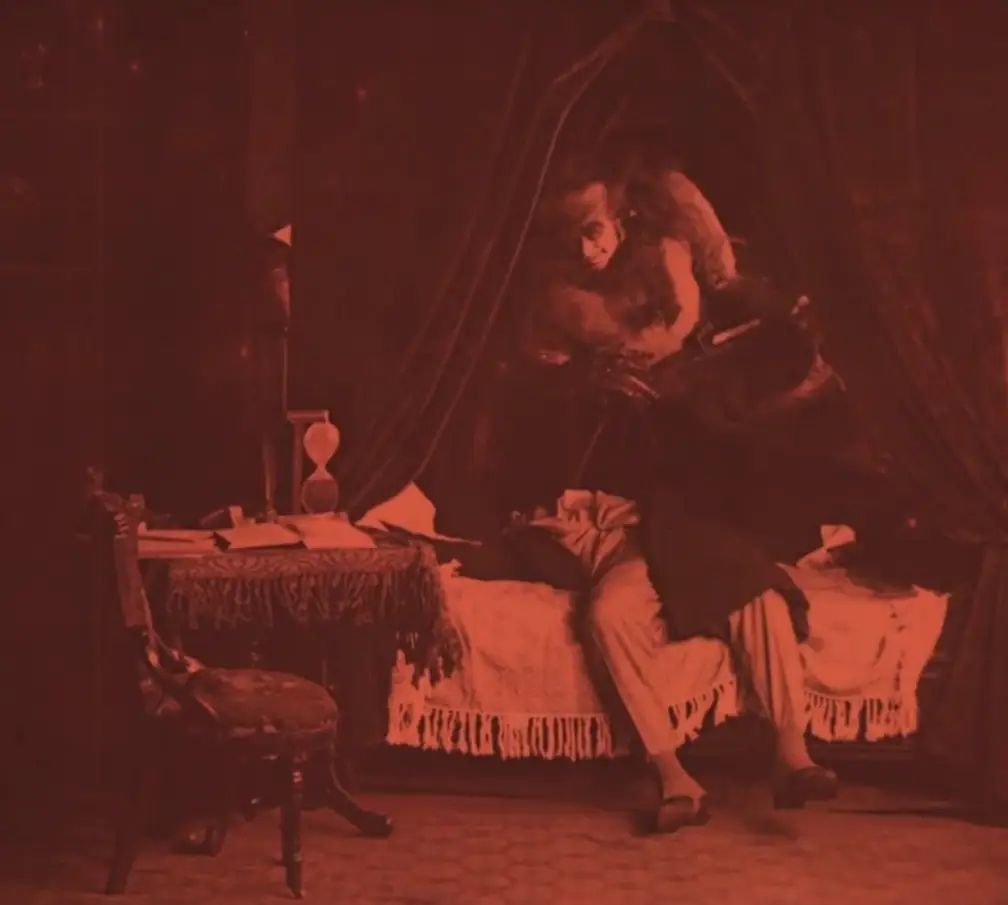
The narrative is a bit abstract, but the intrigue is in how it diverges from the original, ending up with something a bit more Jekyll & Hyde. The creature isn’t made from an assortment of body parts brought back to life. Instead, it’s created using vials and chemicals in a boiling cauldron. The effect was made by reversing footage of a fiery melting dummy.
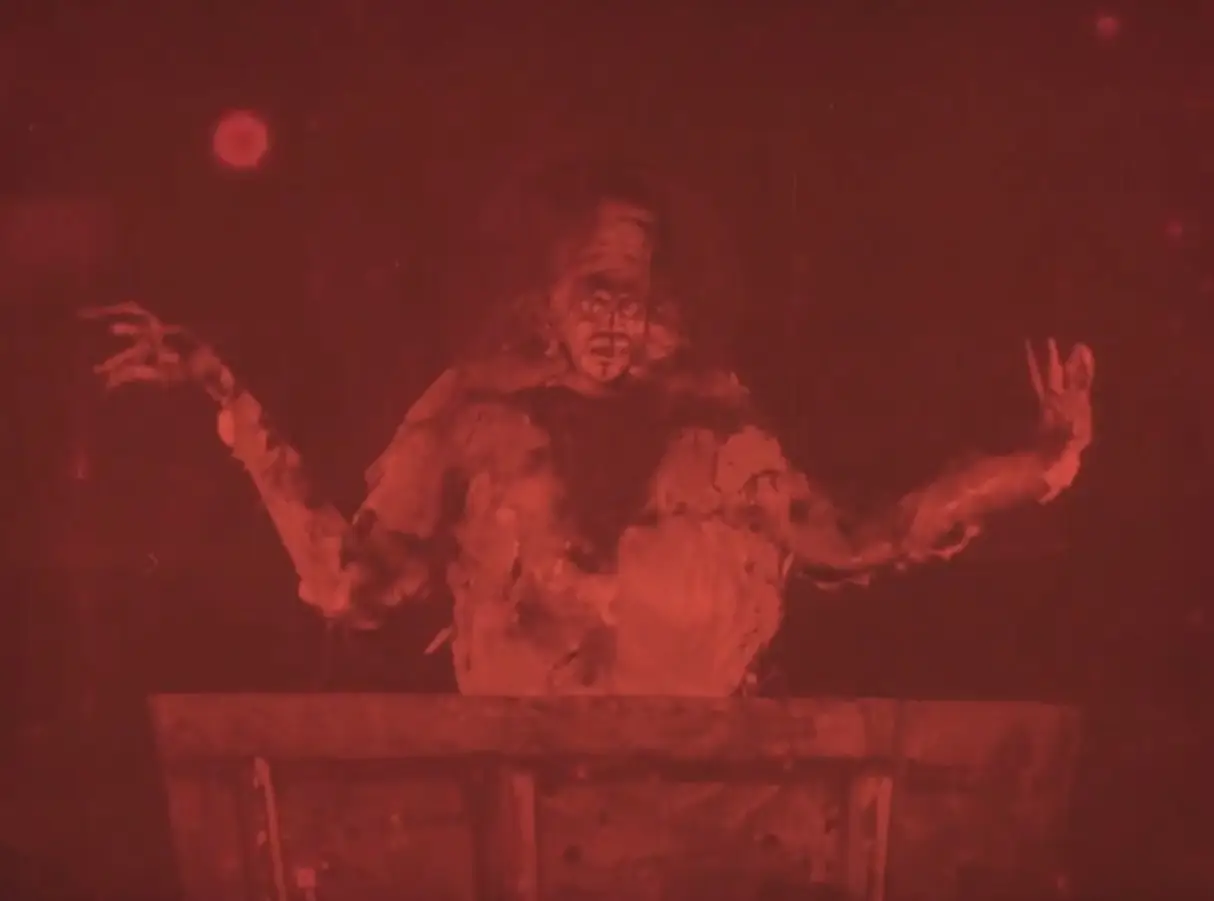
Frankenstein soup, at last. Here’s how the Kinetogram describes the scene:
“The formation of the hideous monster from the blazing chemicals of a huge cauldron in Frankenstein’s laboratory is probably the most weird, mystifying and fascinating scene ever shown on a film. To Frankenstein’s horror, instead of creating a marvel of physical beauty and grace, there is unfolded before his eyes and before the audience an awful, ghastly, abhorrent monster.”
The monster isn’t all that evil or violent in this adaptation, though. More confused and looking for acknowledgement from its creator. It’s terrified by its own reflection, so much so that in the end it disappears into the mirror itself. The ending is ambiguous on film, as the monster seems to exist as a projection of Frankenstein’s evil or madness. According to the summary, “Frankenstein’s love for Elizabeth overrides his evil tendencies, causing the monster in the mirror to vanish.”
The film almost vanished, too. It was actually lost for decades, until a private collector realized he owned a surviving copy. The Library of Congress eventually got ahold of it for restoration, but that story is worth a read on its own.